Nickel Alloy Forging / 8 min read
Inconel 718 Forged Rings: Forging, Heat Treatment and CNC Machining
Inconel 718 forged rings are open-die forged for high-temperature aerospace applications. The alloy is precipitation-hardening. Pyromet Alloy 718, a cited trade name, has documented good mechanical properties to 1,300°F

Quick Answer
Inconel 718 forged rings are open-die forged for high-temperature aerospace applications. The alloy is precipitation-hardening. Pyromet Alloy 718, a cited trade name, has documented good mechanical properties to 1,300°F (704°C) and has been useful for high-temperature fasteners. That does not make every ring suitable for every aerospace load path, but it tel
Key Takeaways
- Dimensional inspection report against the drawing.
- Material certificate with alloy grade, heat number, and chemistry.
- Heat treatment charts showing times and temperatures.
- Mechanical test results for the heat or lot.
# Inconel 718 Forged Rings: Forging, Heat Treatment and CNC Machining
Inconel 718 forged rings are open-die forged for high-temperature aerospace applications. The alloy is precipitation-hardening. Pyromet Alloy 718, a cited trade name, has documented good mechanical properties to 1,300°F (704°C) and has been useful for high-temperature fasteners. That does not make every ring suitable for every aerospace load path, but it tells procurement teams that this material is not commodity mild steel.
Open-die forging produces simple shapes such as shafts, disks, and rings by working metal between dies that do not completely enclose it. Inconel 718 demands more process control and considerably more energy to form than many standard alloys.
| Buyer priority | What to verify | Source or status |
|---|---|---|
| Alloy identity | Inconel 718 / Pyromet Alloy 718, precipitation-hardening grade | |
| Forging route | Open-die forging for rings; workpiece manipulated in steps | |
| Forging temperature | 1,850–2,050°F as a typical range for discussion | Supplier confirmation required |
| Heat treatment | Solution annealing at 1,750°F, aging at 1,150°F as typical reference values | Supplier confirmation required |
| Machining tooling | Advanced tooling material grades include Micro-Melt M4, D2, A11, M2, T15, H13, NiMark 300 | |
| Dimensional and surface requirements | ISO 2768 general tolerances and Ra 1.6 µm surface roughness as RFQ baseline | Supplier confirmation required |
1. Material Selection and Aerospace Application Limits
Inconel metal is not a single interchangeable product designation. The cited high-temperature group includes Pyromet Alloy 718, Pyromet Alloy A-286, and Waspaloy. These sophisticated alloys require more specialized processing and more energy to head than lower-alloy steels. Specify the exact alloy, trade name or UNS number, and aerospace material specification. A generic “standard alloy” callout is not enough.
Forging and machining are not equivalent routes. Heads and other parts can be made by forging or machining, but forging is generally preferred because it enables material grains to orient with the overall product shape for greater strength. The same logic applies when comparing a forged Inconel 718 ring with a ring machined from bar stock. If the drawing requires directed grain flow or fatigue-critical performance, request a forging route and evidence that grain flow follows the ring contour.
Pyromet Alloy 718 has good mechanical properties to 1,300°F (704°C) in fastener applications. For rings, confirm tensile, yield, and stress-rupture data for the actual heat and section size. Do not rely on fastener data alone.
2. Open-Die Forging Sequence and Process Control
Open-die forging deforms metal between dies that do not completely enclose the workpiece. The material is pressed through a series of movements until the desired shape is achieved. Typical shapes include shafts, disks, and rings, often requiring stepwise rotation or other manipulation.
For Inconel 718, open-die forging is hot work above the recrystallization temperature. Cold forging occurs below that temperature. The commercial implication is direct: the supplier must control start and finish forging temperatures across the entire ring, not just report a furnace setpoint.
Treat 1,850–2,050°F as a typical forging temperature range for discussion. It is not a universal purchase specification. Require the actual working range to be documented for each heat number and ring size.
Do not confuse flashless forging with the normal open-die route for Inconel 718 rings. Flashless forging is often classified as precision forging and is used for materials such as aluminum and magnesium. Accept “precision forged” only if the supplier has explicitly qualified that route.
3. Heat Treatment: Solution Annealing and Aging
Inconel 718 is precipitation-hardening, so heat treatment is the primary control step for final mechanical properties. The cited material group requires specialized processing. Ask the mill or forging house for furnace charts, soak times, cooling method, and mechanical test results, not just a certificate.
For RFQ baseline purposes, use solution annealing at 1,750°F and aging at 1,150°F. These reference values are not independently verified in the supplied source context. Confirm them against the applicable AMS specification, ring section size, and required mechanical properties.
High-temperature service requires additional evidence. Pyromet Alloy 718 is cited as having good mechanical properties to 1,300°F (704°C). Request post-heat-treatment tensile results, applicable hardness or conductivity checks, and stress-rupture data when the ring operates at elevated temperature.
4. CNC Machining Parameters and Tooling for Forged Rings
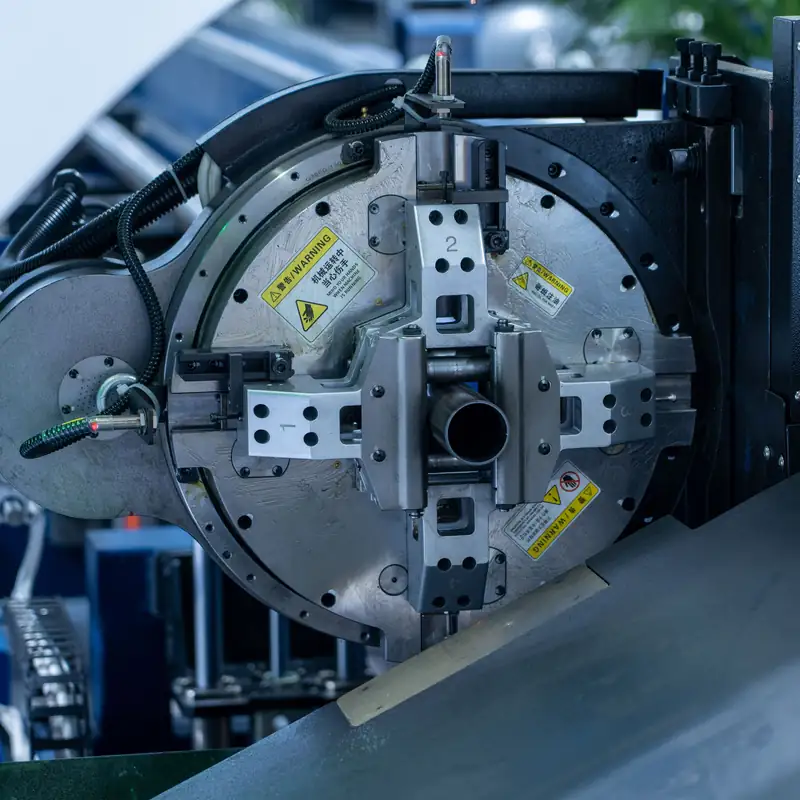
Machining Inconel 718 is not a simple standard-alloy job. The material is precipitation-hardening and requires significantly more energy to form than standard alloys. Machining demands similar process rigor. Reject any supplier that proposes generic “stainless steel” speeds and feeds.
Use the following ranges only as RFQ discussion points. They are not verified process guarantees and must be confirmed with the machine shop:
| Parameter | Preliminary RFQ discussion range | Status |
|---|---|---|
| Surface speed | 15–60 SFM | Confirm with supplier |
| Feed | 0.002–0.006 in/rev | Confirm with supplier |
| Roughing depth of cut | 0.010–0.080 in | Confirm with supplier |
| Tooling substrate and coating | Selected from qualified advanced tooling grades | plus supplier confirmation |
Advanced tooling materials standard grades include Micro-Melt M4 Alloy, No. 610 Alloy (AISI Type D2), Micro-Melt A11 Alloy, Speed Star Alloy (AISI Type M2), Micro-Melt T15 Alloy, AerMet-for-Tooling Alloy, No. 883 Alloy (AISI Type H13), and NiMark 300 Alloy. Selecting the right grade depends on tool geometry, coating, coolant pressure, machine rigidity, and whether the ring has forging scale or interrupted cuts.
For an RFQ, require a signed machining parameter sheet covering tool material, coating, edge prep, coolant type and pressure, and tool-wear inspection intervals.
5. Dimensional Tolerances, Surface Finish, and Inspection Evidence
Open-die forging is not a net-shape precision process. It produces simple shapes that usually need final machining to meet drawing dimensions. The supplier should therefore state which dimensions are forged, which are machined, and what inspection applies to each.
ISO 2768 is a useful baseline for general tolerances. Ra 1.6 µm is a common machined surface finish in aerospace. Confirm both against the specific ring feature; an as-forged ID may not meet Ra 1.6 µm, while a machined sealing face may.
Request these records from suppliers:
- Dimensional inspection report against the drawing.
- Material certificate with alloy grade, heat number, and chemistry.
- Heat treatment charts showing times and temperatures.
- Mechanical test results for the heat or lot.
- Surface roughness measurements on critical surfaces.
- Tooling and machining parameter sheet when machining is subcontracted.
- NDT reports if required by the drawing or purchase order.
Size availability is a separate risk. Heat-treated alloy steel grades are commonly available in diameters of 1/2 in. to 2 in., with other grades and diameters on special order. The same commercial logic applies to Inconel 718 rings. Confirm the supplier’s open-die tooling range, minimum and maximum ring diameter, and wall thickness before locking the specification.
6. RFQ Checklist and Supplier Comparison Framework
Use the following framework to separate a controlled aerospace process from a general forging shop that stocks standard alloys and hopes the grade is close enough.
| RFQ item | Why it matters | Evidence to request | Source or status |
|---|---|---|---|
| Exact alloy and heat treat condition | Prevents substitution with reserve alloys or similar grades | Material test report, UNS or trade name | |
| Forging route | Open-die, ring-rolled, or machined from bar changes grain flow and cost | Process route description, grain-flow sample if required | |
| Forging temperature range | Controls microstructure and repeatability | Furnace charts, travel documents | Supplier confirmation required |
| Solution anneal and aging | Controls precipitation-hardening response | Heat treatment charts, mechanical test results | Supplier confirmation required |
| CNC machining parameters | Affects surface integrity, tool cost, and delivery | Signed parameter sheet, tooling grade | plus confirmation |
| Dimensional and surface requirements | Determines whether the ring is fit for installation | Dimensional report, roughness measurements | Supplier confirmation required |
| Diameter and section availability | Common sizes may not be stocked; special order may apply | Mill capacity confirmation, MOQ | |
| Mechanical capability | Must meet elevated-temperature service needs | Tensile, hardness, stress-rupture where applicable |
Do not accept reserve alloys or an unspecified alternative without a written chemistry review. Several precipitation-hardening grades in the high-temperature group are not interchangeable without design authority approval. If a supplier proposes a substitute, require original design authority sign-off before award.