Nickel Alloy Machining / 9 min read
Inconel 625 Round Bar: Machining and Heat Treatment Guide
Direct answer: Do not buy Inconel 625 round bar for chemical pump shafts against a generic 304 or 303 machining sheet. The standard-alloy dataset covers grades such as 253MA, 301, 302HQ, 303, and 304 with mechanical prop

Quick Answer
Direct answer: Do not buy Inconel 625 round bar for chemical pump shafts against a generic 304 or 303 machining sheet. The standard-alloy dataset covers grades such as 253MA, 301, 302HQ, 303, and 304 with mechanical properties listed by form and treatment. It contains no verified Inconel 625 speed/feed table or solution-anneal curve. Procurement and engineer
Key Takeaways
- High-temperature strength in sophisticated alloys is not composition alone; it is the combination of unique chemical composition and heat treatment processing.
- For high-temperature applications above 600°F, a low-cost heat treatment process similar to T5 can produce maximum precipitates with uniform distribution and optimum particle size.
- 310 is recommended in thick sections or high-heat-input fabrication where subsequent solution heat treatment cannot be performed. That is not an Inconel 625 specification, but it demonstrates that heat-treatment feasibility depends on section size and manufacturing route.
- Precipitation-hardening 630 achieves high strength without distortion by aging after machining. For Inconel 625, confirm whether solution annealing occurs before or after rough machining and how distortion is controlled on pump-shaft lengths.
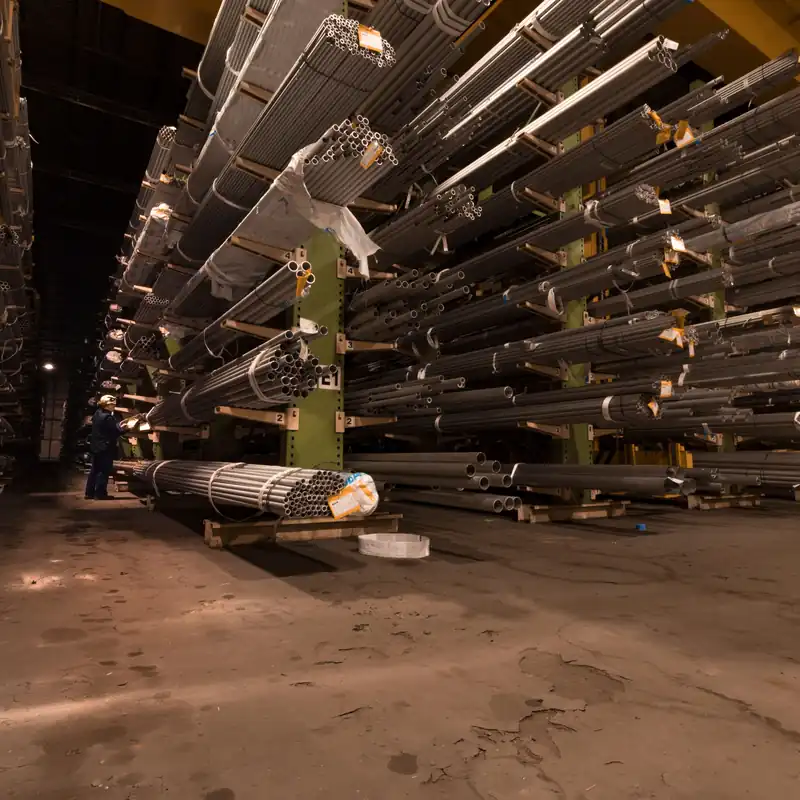

# Inconel 625 Round Bar: Machining and Heat Treatment Guide
Direct answer: Do not buy Inconel 625 round bar for chemical pump shafts against a generic 304 or 303 machining sheet. The standard-alloy dataset covers grades such as 253MA, 301, 302HQ, 303, and 304 with mechanical properties listed by form and treatment. It contains no verified Inconel 625 speed/feed table or solution-anneal curve. Procurement and engineering teams should require supplier-qualified machining parameters, furnace records, and acidic-corrosion test reports before RFQ award.
RFQ at a Glance
| Item | Specify | Evidence to request |
|---|---|---|
| Material | Inconel 625 round bar, grade/UNS | Mill test certificate |
| Mechanical properties | Tensile, yield, elongation, hardness by form/treatment | Supplier test report similar to standard-alloy format |
| Machining | Supplier-qualified speed, feed, depth of cut, tooling | First-article or parameter sheet |
| Heat treatment | Solution anneal | Furnace time-temperature chart; quench method |
| Corrosion | Acidic media test requirements | Test report; do not accept 304/630 data as substitute |
| Diameter | Standard 1/2–2 in range; special order for other sizes | Dimensional inspection report |
| Tolerances | ISO 2768 class | Measured report |
| Surface finish | Ra 0.8 µm | Roughness measurement |
1. Buyer Decision Table: Standard Alloys vs. Inconel Metal and Benchmark Grades
Chemical pump shaft buyers should separate benchmark alloys that are documented in the standard-alloy context from Inconel metal data that must be confirmed separately.
| Candidate | Relevant property from context | Buyer check before comparison |
|---|---|---|
| 630/S17400, precipitation-hardening steel | High tensile and torque strength; pump and boat shafts, nuts, bolts, marine hardware. Aging after machining gives high strength without distortion. Corrosion resistance similar to type 304. | Acceptable only if corrosion similar to 304 is enough for the acid service |
| 310, austenitic 25/20 chromium nickel steel | Excellent resistance to scaling at high temperatures. Recommended where thickness exceeds 12 mm or where high heat input methods are used and subsequent solution heat treatment cannot be performed. | High-temperature service only; not an acid-service substitute |
| Type 440C and related 440A/B/C | Cr 17, C 1.00 for 440C; hardenable by heat treatment; fair machinability. Used for valves, bearings, cutlery. | Not a chemical-pump shaft substitute |
| Inconel 625 round bar | Not listed in the available standard-alloy mechanical property table | Supplier-specific machining, heat treatment, and corrosion package required |
Sophisticated alloys such as precipitation-hardening 630 and high-temperature grades require different decision gates. For aggressive acidic chemical pump service, good high-temperature scaling resistance or moderate aqueous corrosion resistance is not enough.
2. Machining Inconel 625 Round Bar: What to Require from a Supplier
The knowledge base contains no verified Inconel 625 cutting-speed, feed-rate, or tooling specification. Do not apply 304 or 303 parameters to Inconel metal. Standard alloy tables do not transfer directly to Inconel 625. Alloy-specific machinability is documented for type 440C, which is rated only "fair" within its family.
Request the following from the supplier:
| Parameter | Required supplier data |
|---|---|
| Cutting speed | Start and maximum speed for roughing and finishing, in m/min or SFM |
| Feed rate | mm/rev or in/rev for the actual bar diameter and depth of cut |
| Depth of cut | Roughing and finishing depths for stable bar holding |
| Tooling | Insert grade, coating, nose radius, and tool holder recommendation |
| Condition | Machining response for solution-annealed bar |
| Surface finish | Confirmation that Ra 0.8 µm is achievable after finish turning or cylindrical grinding |
| Tolerances | Measured capability for ISO 2768 class specified on the drawing |
Treat this as a supplier-qualification checklist, not a machining parameter chart. If the supplier cannot provide Inconel 625-specific starting parameters, they should state “not qualified” and offer a trial-cut protocol rather than sending a standard austenitic stainless chart.
For pump shafts and valve spindles, dimensional stability also matters. Precipitation-hardening steel 630 shows one processing order: aging after machining gives high strength without distortion. Inconel 625 requires its own sequence confirmation, especially if final machining occurs after solution annealing.
3. Heat Treatment: Solution Anneal and Controlled Processing
Specify solution annealing as a defined process, not merely as “anneal.” Request the exact solution temperature, soak time, cooling method, and the point in manufacturing where heat treatment occurs.
The broader benchmark data shows why heat treatment position and control matter:
- High-temperature strength in sophisticated alloys is not composition alone; it is the combination of unique chemical composition and heat treatment processing.
- For high-temperature applications above 600°F, a low-cost heat treatment process similar to T5 can produce maximum precipitates with uniform distribution and optimum particle size.
- 310 is recommended in thick sections or high-heat-input fabrication where subsequent solution heat treatment cannot be performed. That is not an Inconel 625 specification, but it demonstrates that heat-treatment feasibility depends on section size and manufacturing route.
- Precipitation-hardening 630 achieves high strength without distortion by aging after machining. For Inconel 625, confirm whether solution annealing occurs before or after rough machining and how distortion is controlled on pump-shaft lengths.
Do not accept a certificate that says only “heat treated.” Request the furnace time-temperature chart, quench method, and post-heat-treatment mechanical results in the standard format of tensile strength, yield strength, elongation, and hardness.
4. Corrosion Resistance in Acidic Environments
The knowledge base does not provide Inconel 625 acid-resistance values for specific acidic media. Procurement should request supplier-controlled corrosion data for the actual process fluid: acid type, concentration, temperature, chloride content, and whether the shaft is exposed to crevice conditions under seals or sleeves.
A common failure mode is accepting a standard-alloy comparison without acid data. For example, 630/S17400 has corrosion resistance similar to type 304. Type 304's annealed plate benchmark is 515 MPa tensile, 205 MPa yield, 40% elongation, and 92 HRB. That mechanical-property row says nothing about resistance to sulfuric, hydrochloric, phosphoric, or organic acid streams.
For chemical pump shafts, specify:
- Test method and environment for the target acidic media.
- Evidence of resistance after final heat treatment.
- Any weld or repair procedure if the bar is not a single solid shaft section.
- Surface condition during test: as-machined at Ra 0.8 µm or as-ground.
If the environment is high-temperature scaling rather than acid, 310 may be considered for furnace or heat-exchanger components. It is not a validated substitute for Inconel metal in acidic chemical pump service.
5. Tolerances, Surface Finish, and Inspection Documents
For importers and pump OEMs, dimensional control is a cost and failure issue. Specify ISO 2768 with the correct class and state whether it applies to cold-drawn or machined surfaces. For bearing-journal diameters, seal areas, and threads, use specific drawing tolerances rather than relying on general ISO 2768.
Surface finish should be explicit: Ra 0.8 µm. Ask whether the supplier plans to achieve this by finish turning or cylindrical grinding, and request a measured roughness report for each lot or first article.
Inspection documentation should follow the structure used in standard-alloy procurement: grade, UNS number, common form, treatment, tensile strength, yield strength, elongation, and hardness. For Inconel 625, add:
- Furnace chart for solution annealing.
- Corrosion test report for acidic media.
- Dimensional report against ISO 2768 class.
- Surface roughness report for Ra 0.8 µm.
- Mill test certificate showing heat number and bar traceability.
If an independent laboratory is proposed, confirm whether the laboratory has the required accreditation. The available benchmark reference includes a NADCAP - Laboratory entry in connection with mill-annealed 13.5 mm diameter round bar testing. That is not Inconel 625-specific, but it shows the type of third-party evidence buyers should request when quality requirements are high.
For exporters and importers holding reserve alloys for emergency shaft replacement, apply the same documentation standard. A reserve-alloy lot without heat-treatment traceability, surface-finish evidence, or acidic-corrosion data is a commercial and technical risk.
6. Export RFQ Guidance for Chemical Pump Shafts
Use this checklist when requesting quotes for Inconel 625 round bar:
- Material: Inconel 625 round bar, grade/UNS, heat number traceability.
- Condition: Solution annealed or supplier-approved alternative.
- Diameter and length: Standard diameters commonly available from 1/2 in to 2 in for high-pressure or extreme-temperature service; other diameters require confirmation or special order.
- Tolerance: ISO 2768 class and any special fits for bearing or seal journals.
- Surface finish: Ra 0.8 µm with measurement method.
- Mechanical properties: Tensile, yield, elongation, and hardness in supplier format after heat treatment.
- Corrosion data: Acidic media test report or supplier confirmation of missing data.
- Machining package: Qualified speed, feed, depth of cut, tooling, and tool life expectation for Inconel 625.
- Inspection: Mill test certificate, dimensional report, roughness report, furnace chart.
- Export requirements: Bar marking, packing for sea/air freight, country of origin, and any buyer-specific documentation.
Do not award work to the lowest quote if the supplier cannot explain how solution annealing, machining parameters, and corrosion evidence will be controlled for the specific pump-shaft diameter.